Compline, or She Canonized Herself
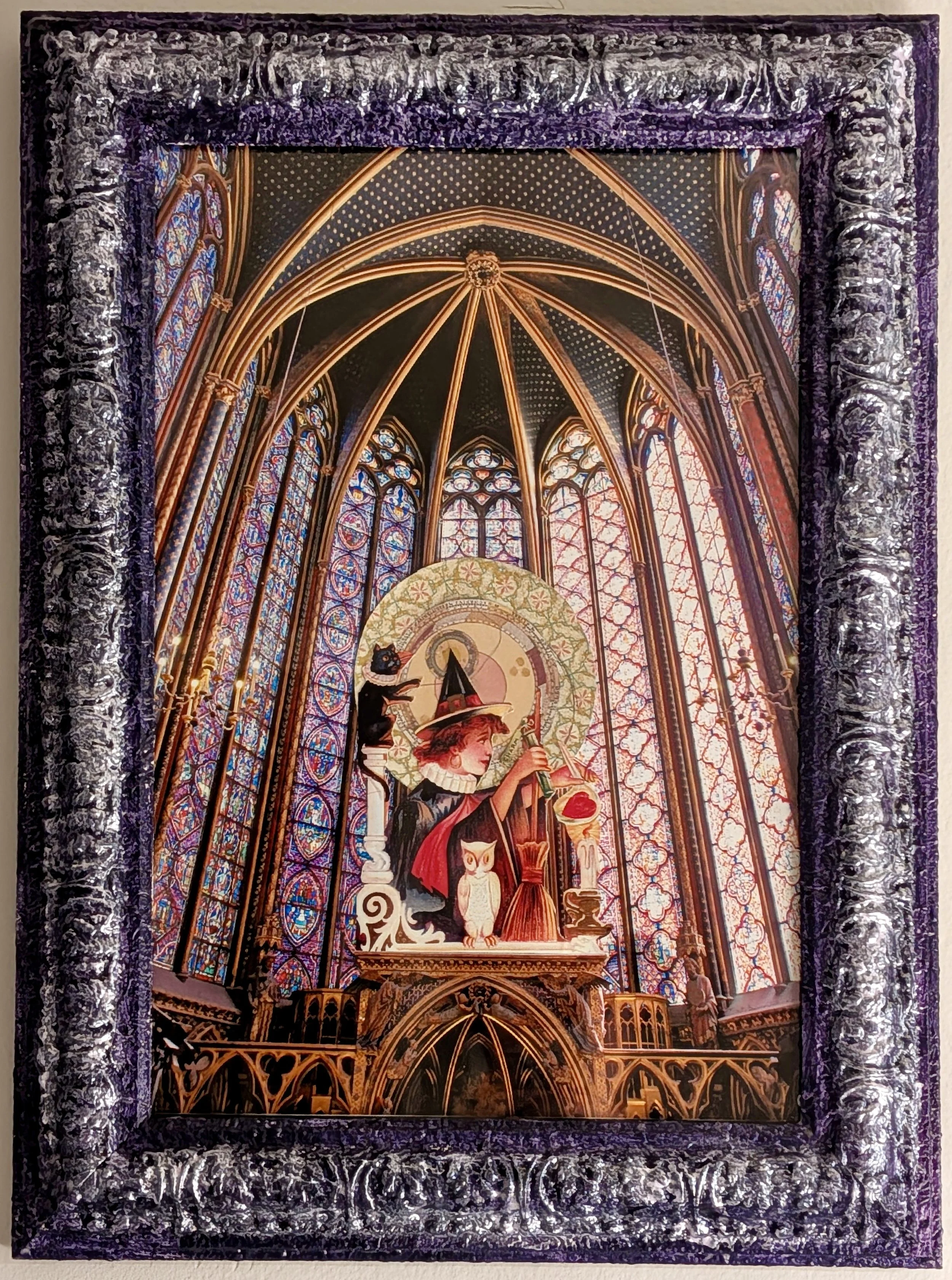
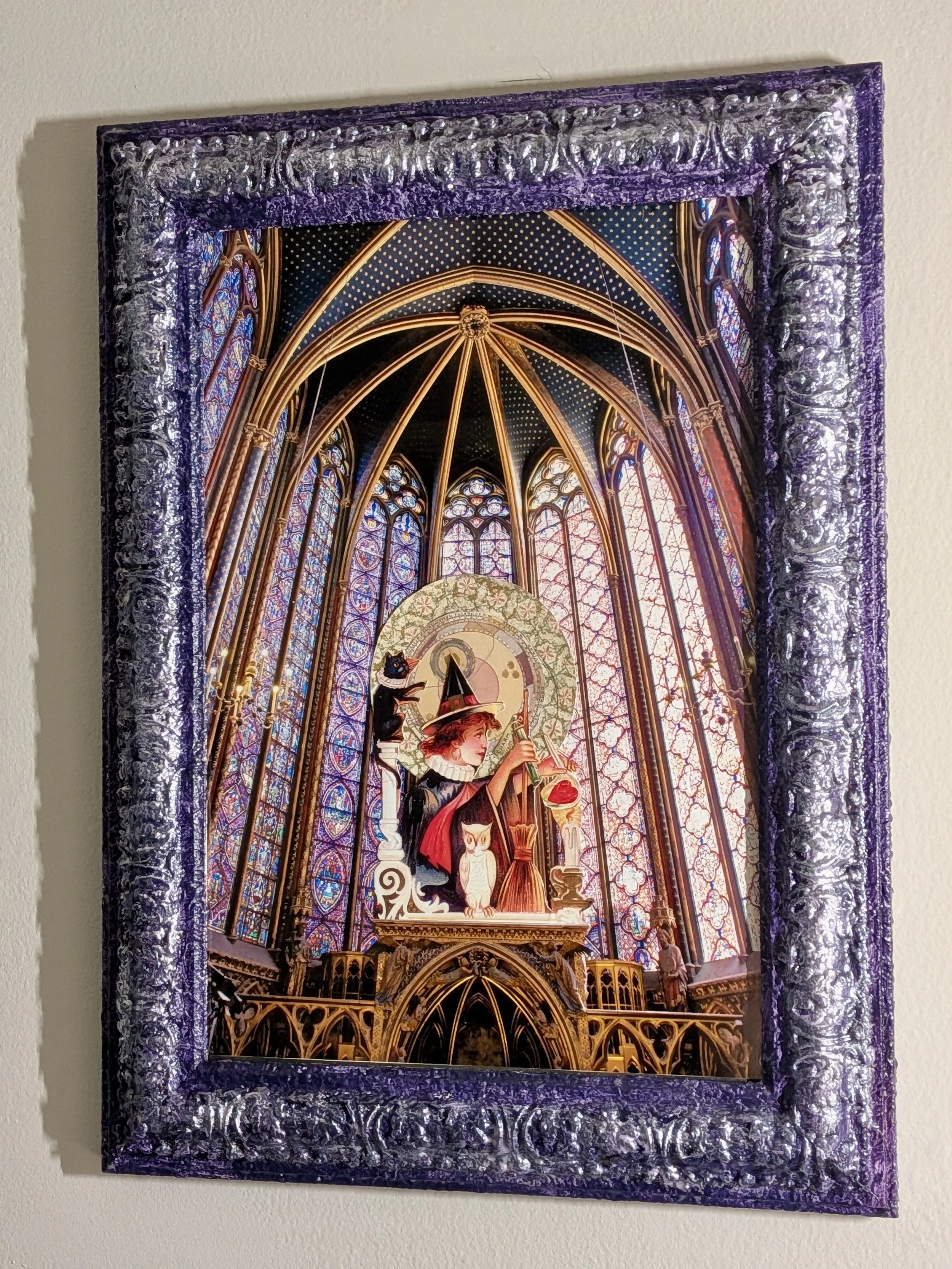
Mixed media collage: found photograph, vintage postcard, gold watercolor and glitter paint accents, painted ornate frame. September 2026.
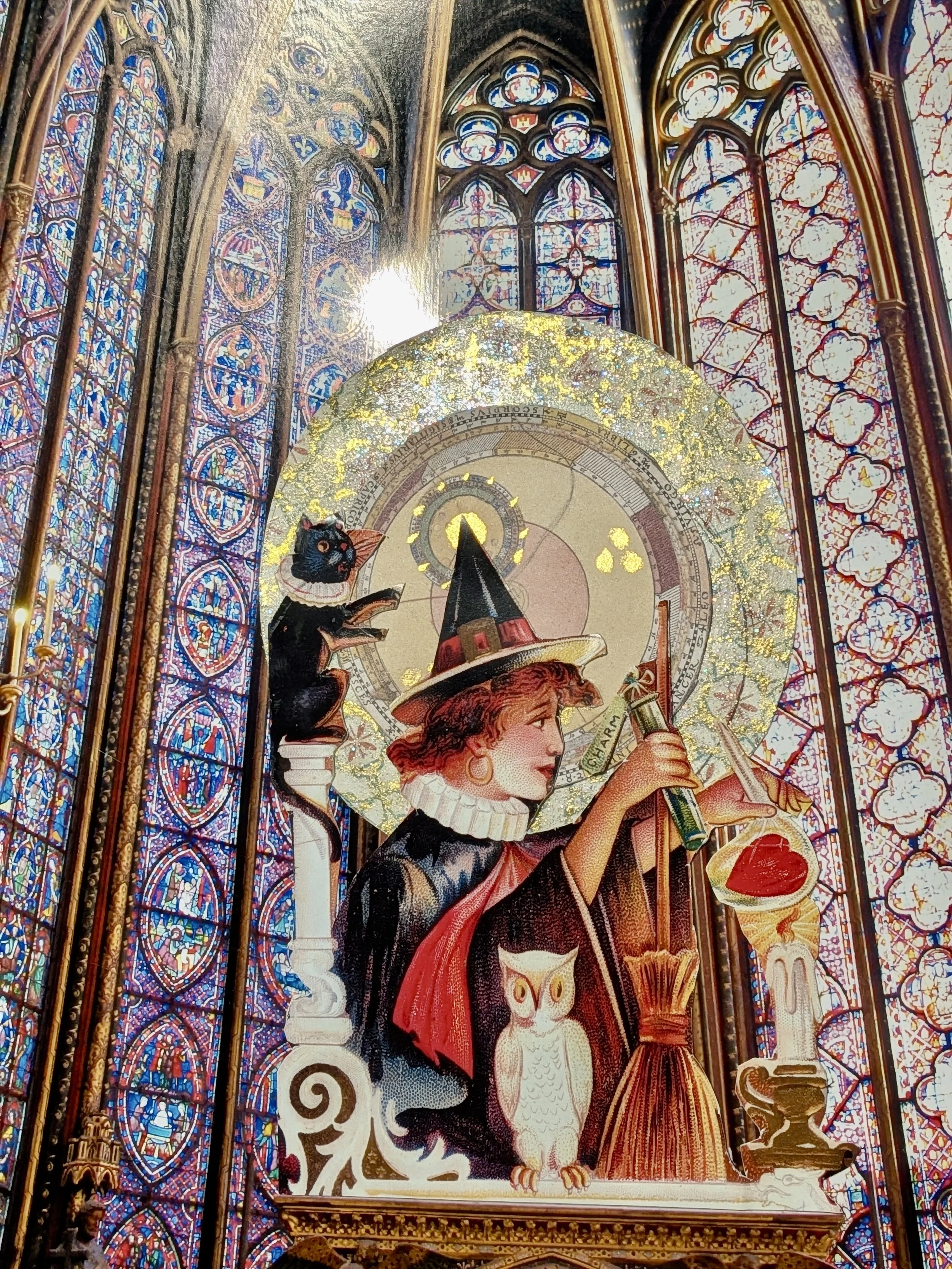
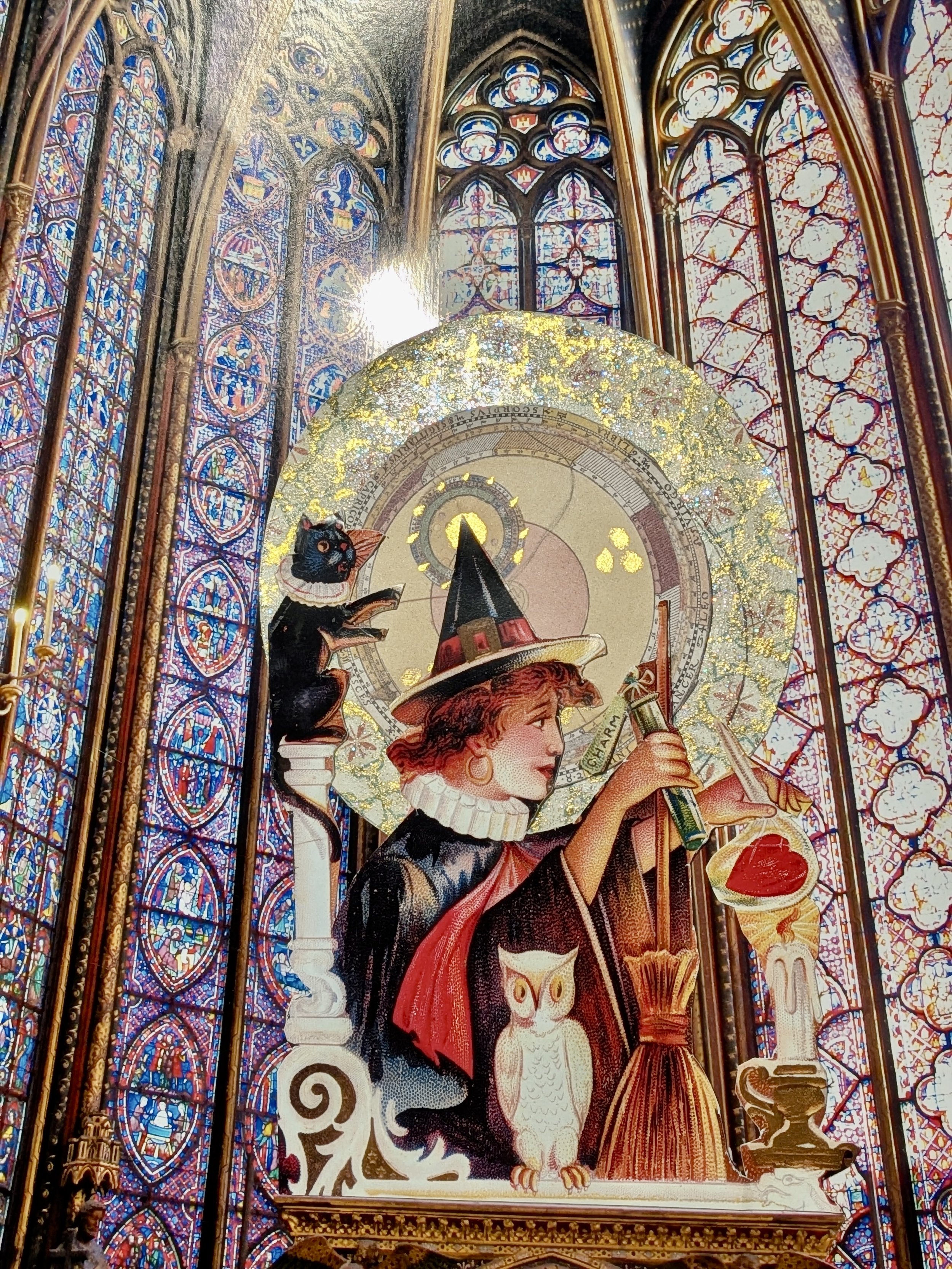
A witch stands in the pulpit of a stained glass window, a halo blazing gold behind her head. She is dressed for the part (black hat, potions, an owl and a cat close at hand), and she has, notably, not been struck down.
This piece is personal. I was on the path toward ordination in my denomination, and I chose to leave it. What followed was a long deconstruction, and then a slower rebuilding of a spiritual life that is more expansive, more self-authored, and less bounded by any one institution. I think visually, and some things I can only work through by making them. Compline is me processing that passage in the only language that has ever fully worked for me: image.
The piece was shaped by the work of Gabriel Garcia Roman, whom I met in grad school when he led a workshop I attended, and whose Queer Icons series has stayed with me ever since. He combines photogravure with collaged decorative paper, gold-leafed halos, and gilded frames modeled on the devotional frames of Mexican Catholic homes, honoring queer and trans people of color as modern-day saints. For him, the halo is a mark of nobility and selflessness, given to people the institution never thought to honor. The move I borrowed from him is the heart of my piece: using the church's own reverent visual language to sanctify someone that language was never meant to include.
The two central images came to me separately. The stained glass is a photograph, and the witch is a storybook-style illustration from a vintage postcard: the familiar witch of fairy tales, and also the figure history has so often accused, ridiculed, and burned. The tone is tongue-in-cheek, but the reverence is sincere.
Concept and Inspiration
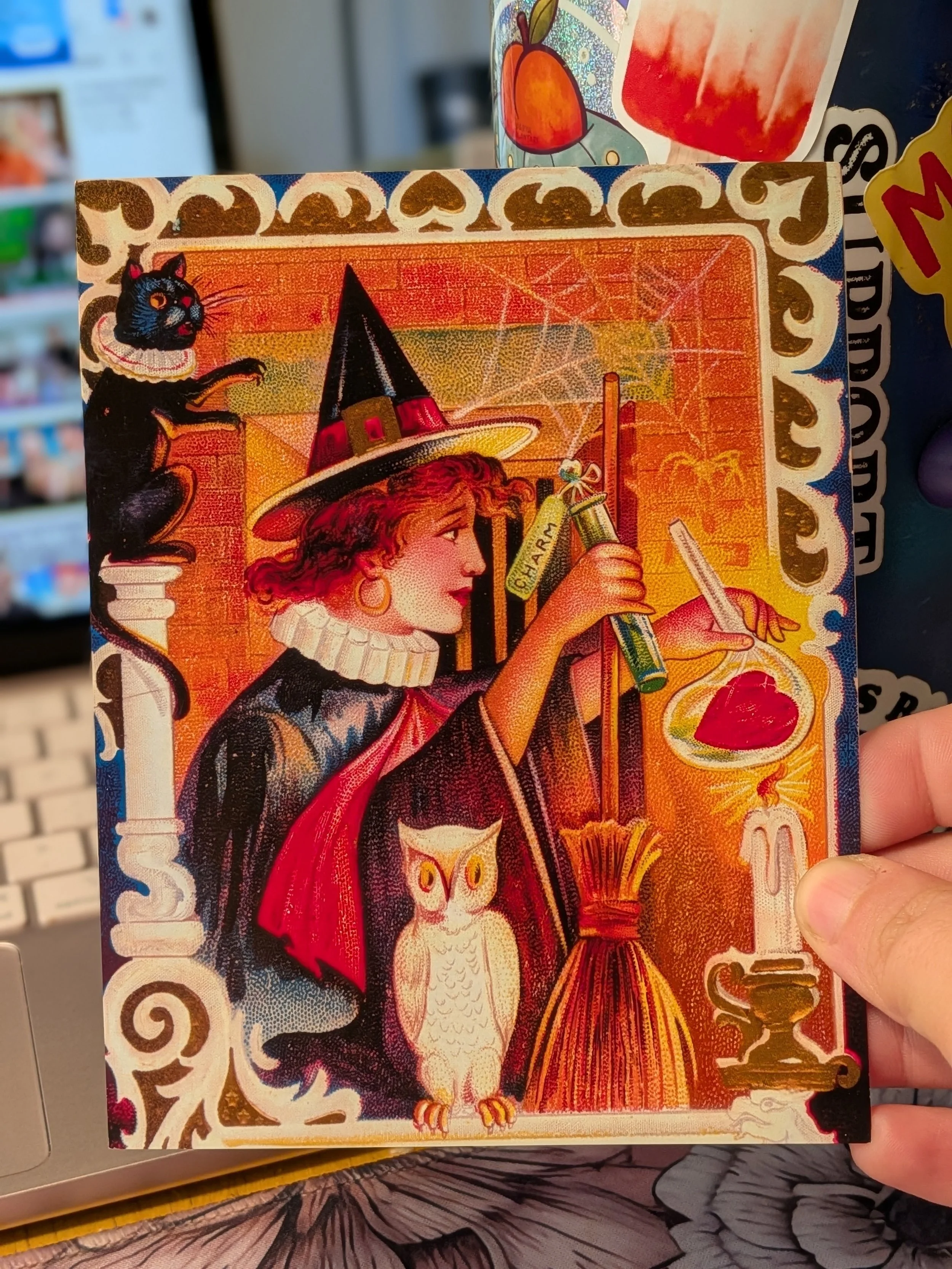
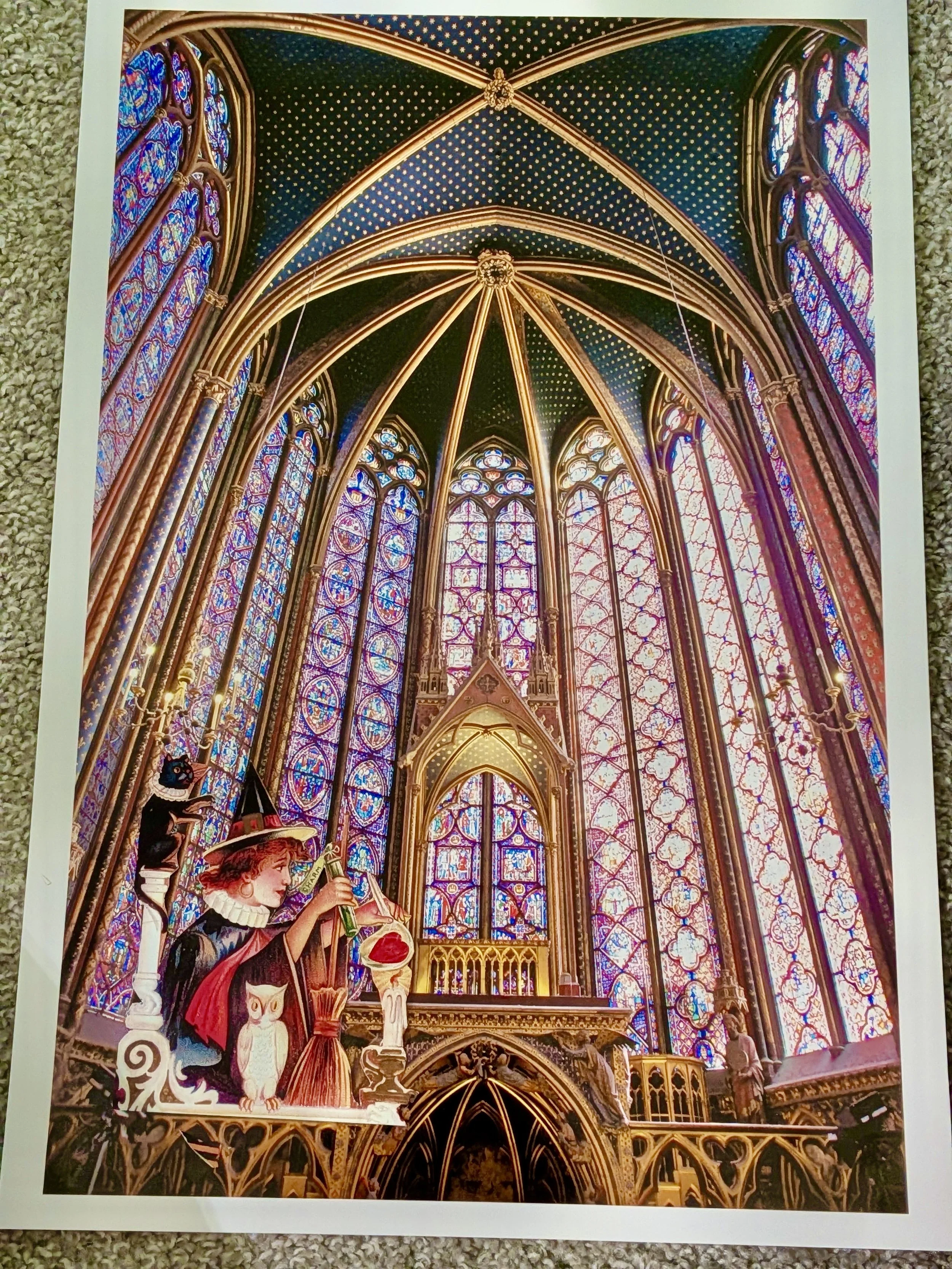
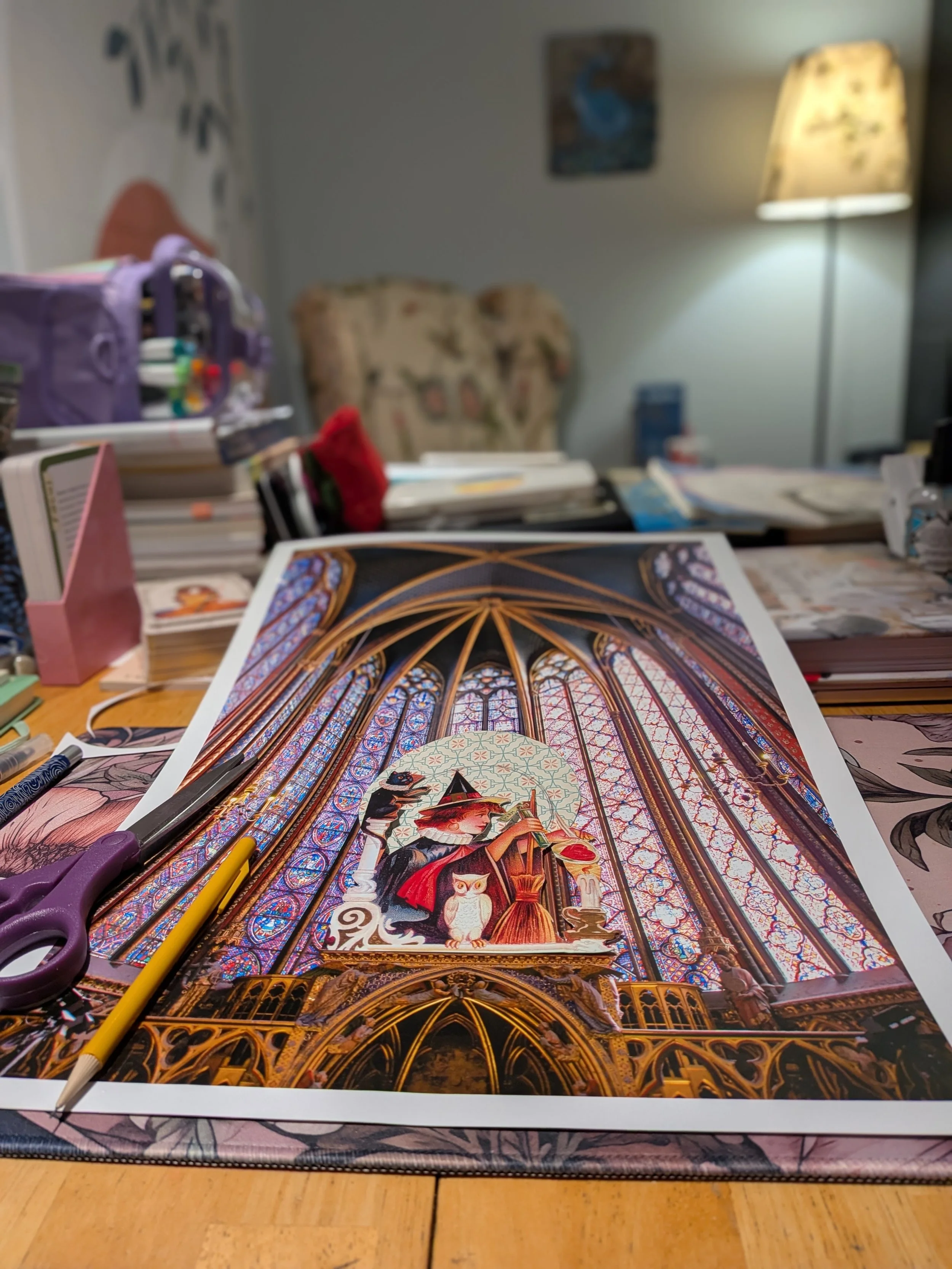
The photograph. I found the print of the stained glass vestibule at Scraplanta. I didn't have a plan for it. I just knew I wanted it, and I held onto it for a while, waiting to learn what it was for.
The postcard. Some time later, at Kudzu, I found the witch postcard: a stylized illustration of a woman mixing potions, with her owl and her cat. I liked her right away, but it wasn't until I got the postcard home and held it up to the photograph that I understood why. I cut her out and set her over the window, and the scale was just right. She wasn't simply in front of the window. She was standing in the pulpit.
Discovering the concept. I didn't start with an idea and execute it; the piece told me what it was about as I worked. Once she was in the pulpit, the questions arrived quickly. Who is allowed to stand there? What does it mean to be haloed by the very tradition that once condemned you? That's when Gabriel's work and my own history with the church came flooding back in.
Building it. I cut the witch out carefully by hand and glued her into place over the window. The halo is collage as well, built up in layers and finished with gold and glitter paint. I wanted the halo rendered with real formal seriousness, in the style of old religious icon paintings, because the sincerity of the technique is what makes the irony land.
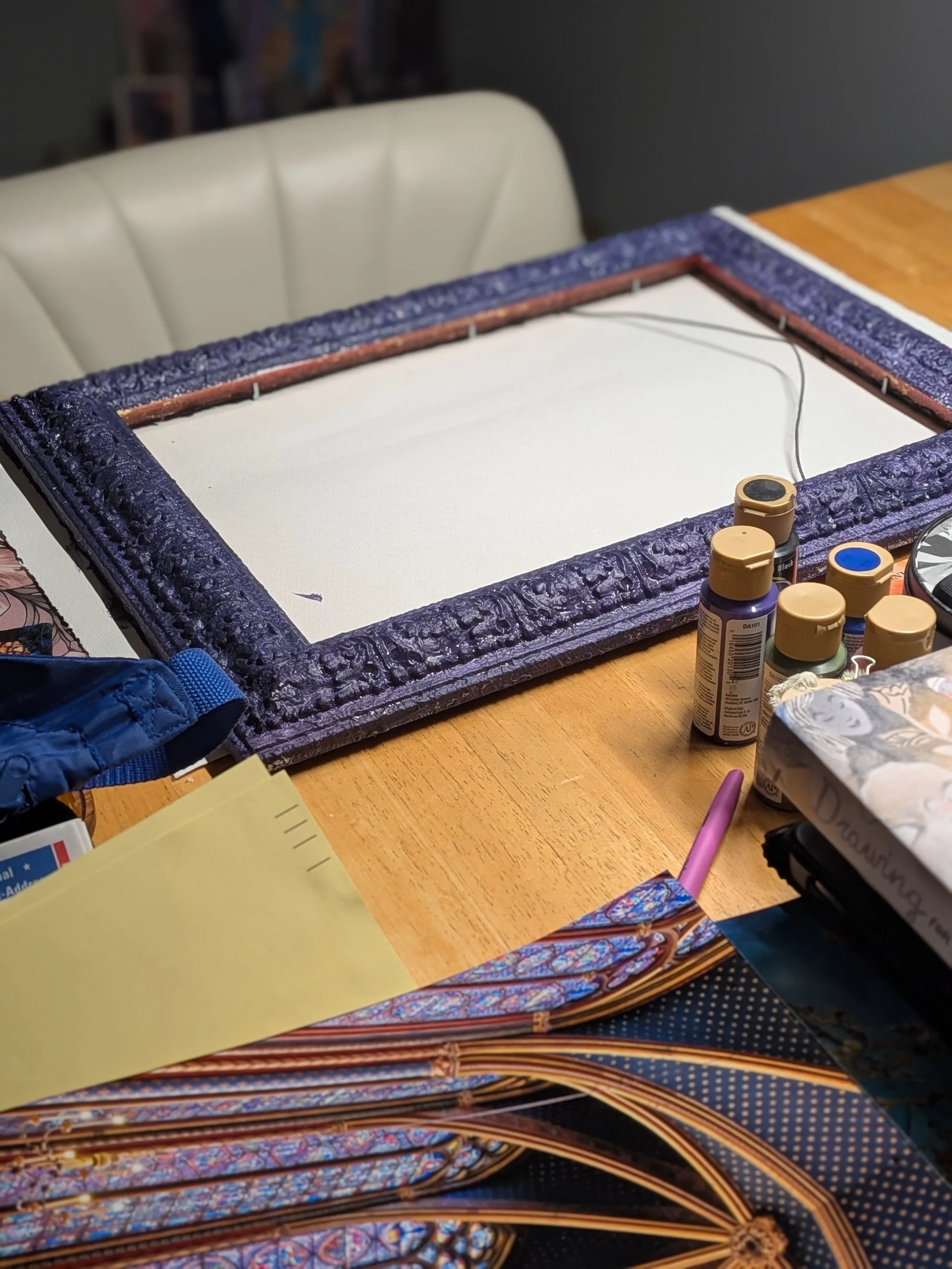
The frame. I always knew the frame would be part of the piece, not just its packaging. I chose an ornate frame and painted it midnight blue, sealed it, then dry-brushed iridescent paint to gild it onto the raised, carved details. It catches the light in a similar way to traditionally gilded frames, but subverts the traditional gold for a more lunar-adjacent palette.
The Process
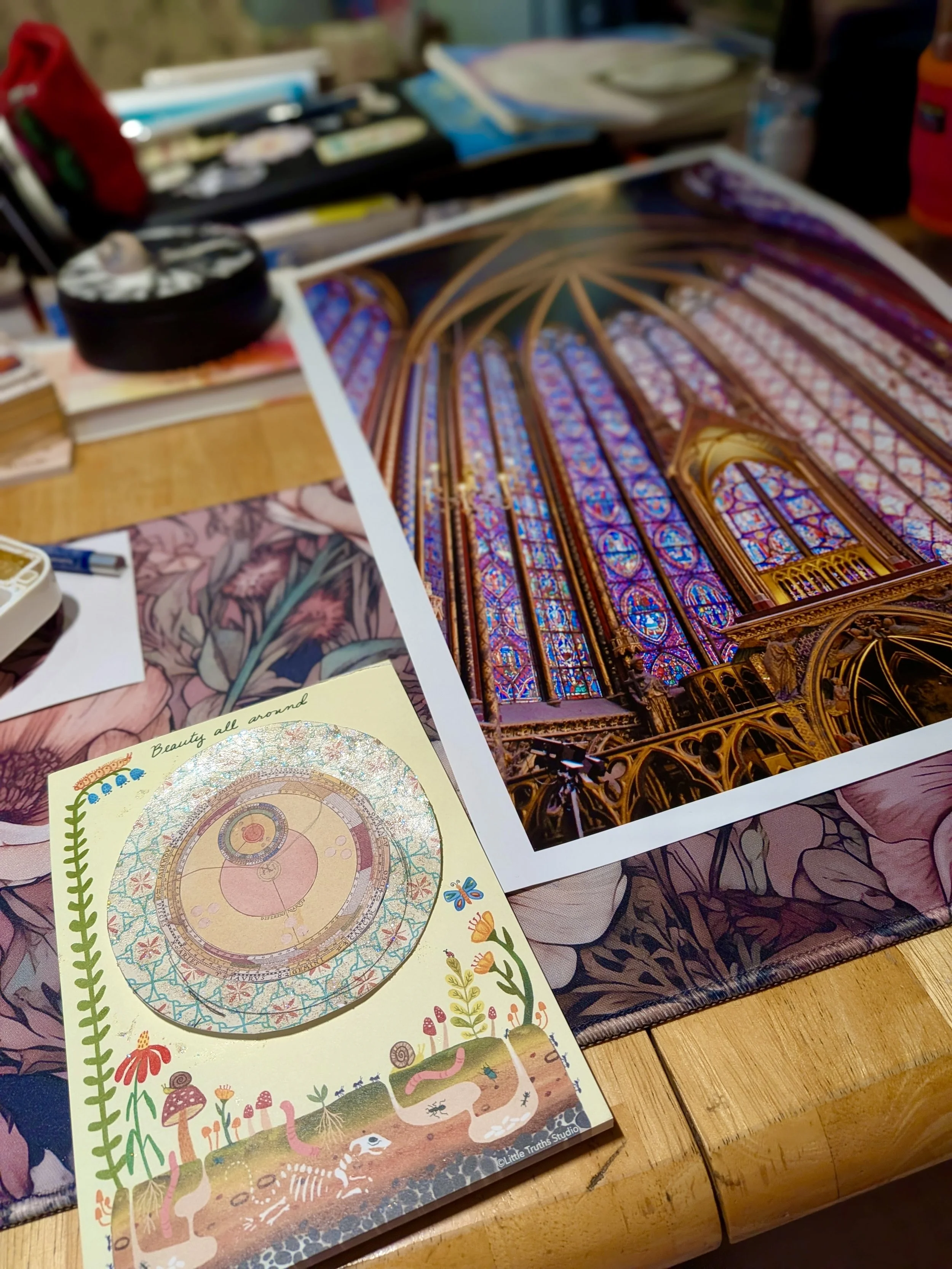


The pulpit. A pulpit is the place from which authority speaks. Placing the witch there is the quiet center of the joke and the argument at once. She's standing where she was never invited to stand, and nothing happens. The lightning doesn't come.
The halo. I did not want to mock sainthood, but to grant it. The gold and glitter are a deliberate choice: glitter is a little bit of joy and irreverence, and the gold is the language of icons. She isn't being teased into holiness. She is sanctified, full stop.
The frame. The frame is midnight blue rather than black. Black would have set the frame apart from the image, sitting around it. Midnight blue ties into the colors of the photograph and makes the frame feel like an extension of the same night that the stained glass glows against, so the piece seems to continue past its edges. It also felt more mystical to me, with more depth. The iridescent dry-brushing is an inversion of the traditional gilding of ornate frames, in which gold catches the light on raised carving. Here the shimmer only shows when you move, or when you look closely.
The title. This piece was first called Patron Saint of Her Own Magic, and I loved it, but it said too plainly what the image was already saying. I wanted something that asked a viewer to look twice. Compline is the final prayer service of the day in the Catholic tradition, the close before night, and its name comes from the same root as "completion." It suits the midnight blue, and it suits a piece about becoming who you were always meant to be. The second half, She Canonized Herself, is the plain-spoken answer: canonization is something an institution does to a person, and here, she does it herself. I like the way the title moves from the obscure and liturgical to the blunt and modern, which is very much what the piece does visually.
Going Deeper